


Interior DESIGN COURSES
1, 2 & 3 YEARS in florence, italy
Overview
For entry-level students there are three study options available; a one-year Diploma course, a two-year Advanced Diploma and a three-year Bachelor’s degree. The 3 years bachelor's degree is issued by Goldsmiths, University of London. FIDI's Interior Design courses are based on intensive, studio-based learning, with studio groups averaging 10 students and a high level of individual teacher contact. Students develop their own design projects through desk critiques, presentations and technical instruction. Students are encouraged to develop their own design identity rather than following a set visual or stylistic approach. The one-year diploma course addresses all of the fundamentals of the interior design profession such as lighting, color, furniture design and space planning. Diploma students can extend their study into the second year to complete an Advanced Diploma. Students who already hold a Bachelor’s degree in design can apply for the Master
FIDI offers a three-year, BA (hons) Interior Design issued in collaboration with Goldsmiths, University of London. See the Bachelor page for requirements.
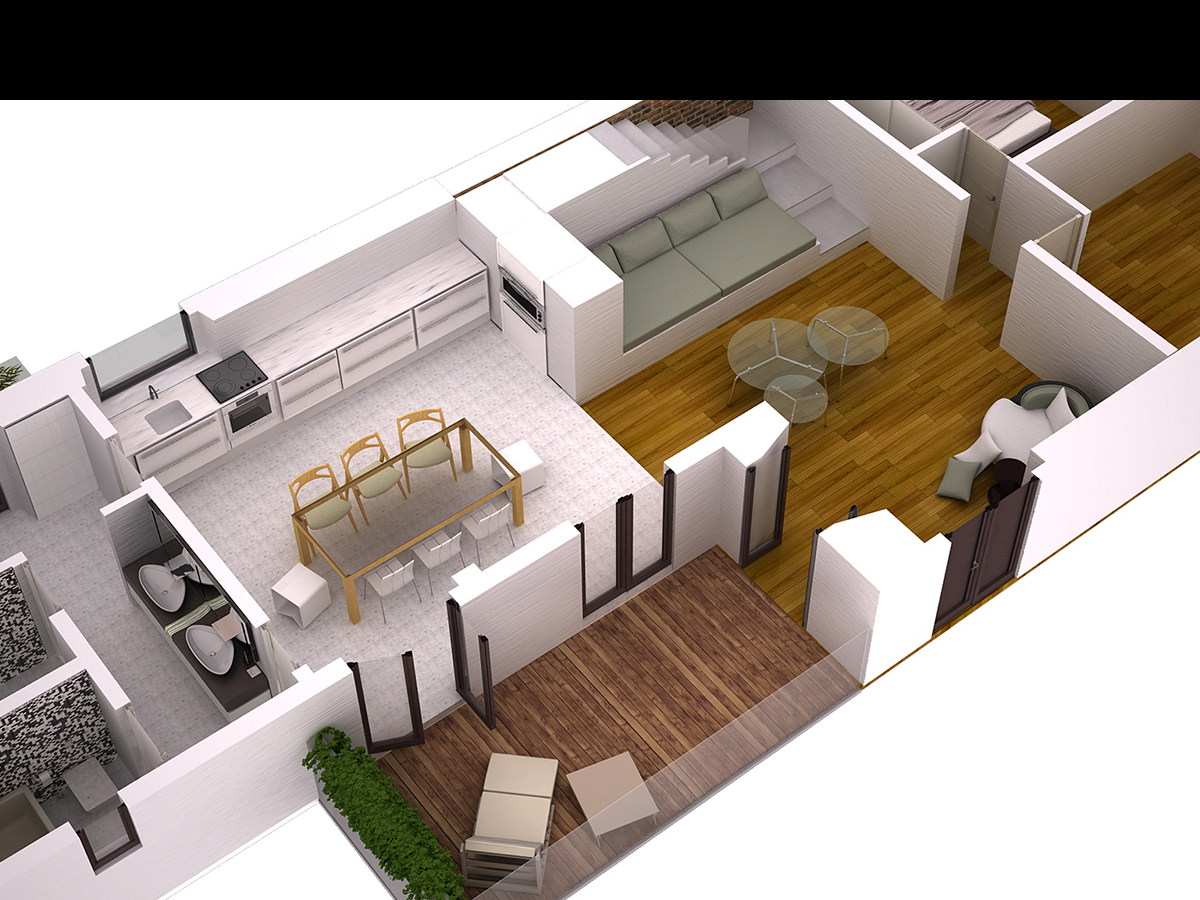
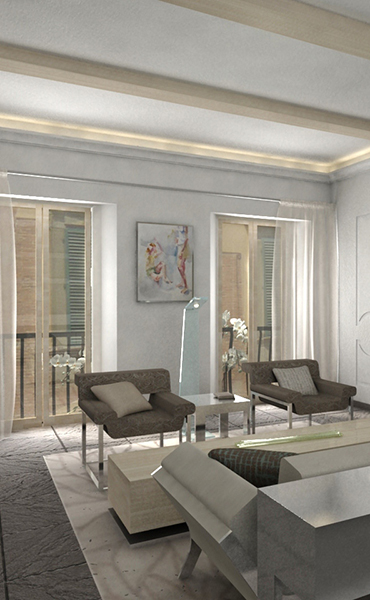
Interior designers are creative, imaginative and artistic. They specialize in the interaction of texture, color, and lighting while creating human space. They also need to be prepared and organized. By combining knowledge with aesthetic vision, interior designers work with clients and other design professionals to develop solutions which are functional, attractive and meet the user needs. Interior designers must especially know about the materials and products used to create and furnish space.
Interior design - 1ST TERM
1 YEAR (30 WEEKS)
Interior Design Studio 1A - In this course you are introduced to the basics of interior design practice through a balance of functional and conceptual assignments. Interior design is a discipline that profoundly influences the spaces we inhabit; impacting lives and overall well-being. Roles such as interior designers, spatial planners, hospitality and retail designers, or sustainable design specialists all play essential roles in shaping society.
Computer Aided Design - During this course you will be introduced to 2-dimensional (2D) and 3-dimensional (3D) computer aided drawing, giving you the opportunity to explore and develop skills in industry-standard software. The initial exploration of this programs focuses on the basic tool sets and working methodologies required to produce 2D plans and sectional drawings, creating the representation of 2D objects in a 3D space in order to produce successful 2D and 3D design products and learn how to output your designs using printers and plotters.
Technical Drawing 1A - This hand drawing course focuses on drawing Italian design objects ranging from the ‘spoon to the city’ from design objects of Alessi to the architecture of Alberti. The course provides you with a foundational understanding of architectural drawing techniques and is designed to provide the fundamental skills and knowledge needed to create 2D manual drawings from 3D architectural elements. With measured drawings and analysis techniques, you will learn to transform complex three-dimensional objects into accurate and detailed two-dimensional representations. Through a combination of theoretical learning and hands on practice, you will explore the fundamental elements of architectural representation, including plans, elevations, sections, and axonometric drawings. You will gain insight into the basic principles and conventions of architectural drawing, including scale, proportion, line weights, and composition.
Art and Design Theory - This course provides you with a comprehensive understanding of the historical and theoretical underpinnings that have shaped the evolution of Italian art and design practices. Through in-depth analysis, critical discussions, and practical applications, you will gain an understanding of traditional art and design theory with its significance in contemporary artistic contexts. Key principles of design theory will be researched, including aesthetics, form, function and visual communication to comprehend the fundamental concepts driving design practices.
Italian Language 1A- The courses will focus mainly on spoken conversational Italian, with themes relating to common life, travel and business travel situations including greetings, days of the week, asking for directions, food, making plans, telling time, purchases and dealing with money and numbers.
interior design - 2nd term
Interior Design Studio Course 1B -
An investigation of more advanced interior design problems including commercial design, exhibitions, and retail. Projects assigned during the second term involves comprehensive problem solving from concept development through to the final presentation stage and including detailed plans, sections, elevations and renderings.
Interior Design Principles and Processes - Knowledge and skills developed within this course will provide a foundation for successive interior design studies. This course will introduce you to the basic principles of interior design by outlining the general context and concepts of design. You will learn to describe the aesthetic and spatial context of design and the relevant approaches utilised in spatial design. You will investigate; geometry, color, light, texture, space, perspective, and proportion.
Technical Drawing 1B - The course provides a more advanced and intensive introduction to hand sketching and the analysis of spaces, buildings, interiors and furniture. The Analytical Drawing course covers many aspects of hand sketching as drawing essentials and techniques, perspective drawing and drawing standards.
Computer Modeling 1B =
This course is an deeper exploration of the 3d Modeling using industry software such as Sketchup. Upon completion of the course, the participants will be able to produce 3D models and basic renderings using modeling and rendering software. You will explore the placement and manipulation of objects and furniture within a 3D space and develop the visual acuity and manipulation of 3D software.
Italian Language 1B - The courses will continue to focus mainly on spoken conversational Italian. This more advanced level class will start to deal with general work and business discussions.
* Program may be subject to change
Interior Design- 2nd year
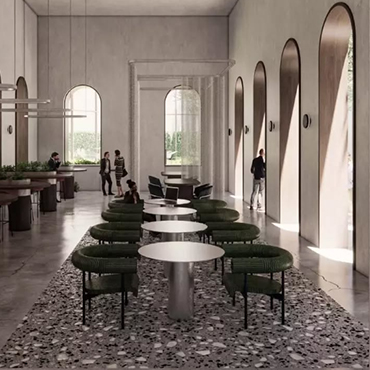
The second year is much more thorough in its exploration of design concepts, materials and technical development. Larger and more complex projects are developed during this year, with greater attention to material selection, lighting and construction details. Students also expand their three-dimensional design skills through furniture design, digital modeling with Rhino and physical prototyping using 3D printing. Furniture projects encourage students to consider ergonomics, materials, structure and fabrication while developing objects from initial concepts through digital models and reduced scale prototypes. Students completing the one-year Diploma need to demonstrate sufficient design and technical skills to progress to the second year.
Interior Design Studio - In this course you will tackle more complex design challenges and develop independent ways of working. In the second year this course builds on the knowledge and understanding, transferable and practical skills from first year Introduction to Interior Design. You will, through investigation and analysis, broaden your understanding of contemporary and complex issues and produce work that has greater conceptual depth and research. The incorporation of skills from furniture design, 3D visualization and theory courses foster the development of critical thinking, research, and analytical skills within a practical context.
Introduction to Furniture Design – This course introduces you to the knowledge and skills required for the design and development of furniture design concepts. You will gain an understanding of the design theories and principles relevant to furniture design; exploring concepts such as form, function, ergonomics, and materials. This course will enable you to integrate design theory with practical applications and discuss how theoretical concepts inform design decisions and enhance functionality, aesthetics, and user experience.
3D Visualisation & 3D Printing – This course builds upon the computer skills gained during the first-year courses Introduction to Interior Design and Computer Aided Design. In this course, you will integrate and expand the work previously produced in Interior Design Studio and Furniture Design to transform your designs into detailed 3D models. Students develop their skills in Rhino for three-dimensional modeling, using increasingly complex tool sets to explore form, furniture, interior spaces and design details. Digital models are also used to produce physical prototypes and scale models through 3D printing.
Art and Design Theory 2 – This course extends the investigation undertaken in the first year course Art and Design Theory. You will engage in more specialised and focused research on design theory topics, critically analysing design principles, methodologies, and philosophies to understand their impact on design practice and aesthetics. Through the exploration of art, architecture and object design theories, you will cultivate your own design philosophy, integrating historical knowledge and contemporary perspectives into the creative processes. The course will teach you to synthesise diverse perspectives from art history and design theory to create innovative and contextually relevant design theory, reflecting a nuanced appreciation for historical and cultural influences.
Internship: Experiential Learning – optional for BA Students You will identify a relevant placement internship among a diverse array of design fields and disciplines, including but not limited to Graphic Design (printmaking, marketing, merchandise, packaging, publication, illustration, motion graphics etc.), Interior Design (commercial, residential, hospitality, healthcare, exhibition, visual merchandiser, etc.), Furniture Design (buying and selling, manufacturer, mass production, client based, etc.), Photography (lens-based media or digital media) and Fine Art (gallery work, curation, display and design, conservation and documentation). The workplace will need to provide relevant mentoring by a senior staff member to oversee your experiential learning on a regular basis.
Digital Photography – This course explores lens based digital imaging for use within the field interior design. You will examine space, light, and vantage point when capturing images to be applied to your relevant field of study. There will be specific emphasis on the creation and production of oversized large-scale work suitable for public display and exhibition systems. You will create a body of photographic work that will be incorporated into your design work.
Italian Language 2A & 2B The course will focus mainly on spoken conversational Italian, with themes relating to common life, travel and business travel situations including greetings, days of the week, asking for directions, food, making plans, telling time, purchases and dealing with money and numbers.
Interior Design - 3rd year
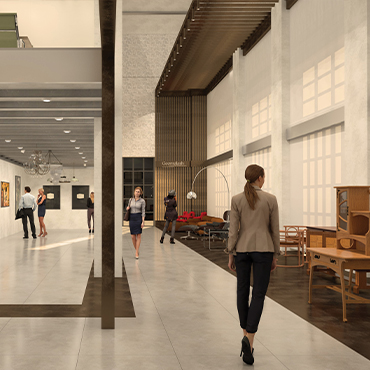
The third year is reserved for students enrolled in the three-year, BA (hons) Interior Design issued in collaboration with Goldsmiths, University of London. The final year builds on skills developed during the first two years, with greater emphasis on advanced technical development, independent research and professional practice. Students undertake a major Thesis Project, developing an individual interior design project from initial research and concept development through to detailed technical resolution and final presentation.
During the third year students develop advanced digital design and technical skills using specialist industry software. This includes Grasshopper for Rhino for parametric and computational design, and DIALux evo for professional lighting design, calculation and simulation. Students also receive additional Revit instruction focused on hotel design, developing BIM skills for the coordination and documentation of complex interior spaces.
Examples of FIDI thesis projects can be viewed on our social media channels and through student projects published on Dezeen.com
Interior Design - Year 3
Design Research Project for Interior Design – In this course, during the final year, you will refine both creative and analytical aspects of your practice and work on self-initiated design projects. The incorporation of skills from Advanced computer design, Professional practice, Lighting design and Building systems course fosters the development of critical thinking, research, and analytical skills within a practical context. This course requires you to undertake a complex interior design project where you will be working autonomously with minimum supervision. The choice of subject matter will be made by you in discussion with your tutors to verify suitability and complexity.
Advanced Computer Design – In this course you will extend your skills, knowledge and understanding of professional level working practices and approaches when creating an advanced three-dimensional project. This course serves as a foundational exploration into the exciting realm of parametric design coupled with advanced 3D printing techniques. You will explore the fundamental principles of parametric design, gaining insights into how mathematical algorithms and parameters can drive the creation of intricate, responsive, and highly customisable design solutions. These visualisations will be utilised in the presentation of your ideas and supported by the work completed in your journal.
Lighting Design & Building Systems – This course offers an overview of key aspects related to lighting design and building systems as they relate to building interiors, (with a specific focus on commercial applications). The course covers key topics including acoustics, building safety and sustainability, helping students understand how these factors affect the planning, performance and experience of interior spaces. Through research and practical exercises, you will develop a general understanding of the requirements for creating and implementing effective lighting and building systems strategies.
Professional Practice – This course serves as an exploration into the skills of professional practice, equipping you with fundamental knowledge necessary for effective engagement with your respective design field. Through this course, you will gain insight into the relationship of ethical, legal, and financial factors within a professional practice. This course will cover professional techniques of self-promotion, interview skills, and real-life experiences of a design-practice. You will develop presentation and communication skills relative to discussing your work, which will enable you to create a set of personal marketing materials to establish a strong personal brand.
Internship; Experiential Learning – Throughout this course, the notion of studio practice or a compatible activity will be promoted in a diverse range of relevant work places. Students will actively engage in the process of securing internships that align with their specific area of design study. You will critically evaluate potential placement opportunities and select those that best match your program goals. During this experience, you will apply theoretical knowledge gained in previous coursework to practical, real-world scenarios. This hands-on experience will allow you to witness and actively contribute to the inner workings of professional design environments. Under the guidance of industry experts, you will participate in design projects, collaborate with teams, and gain insights into the day-to-day responsibilities of design professionals.
Italian Language 3A & 3B - The course will focus mainly on spoken conversational Italian, with themes relating to common life, travel and business travel situations including greetings, days of the week, asking for directions, food, making plans, telling time, purchases and dealing with money and numbers.
* Program may be subject to change
application